What is a wedding seating chart?
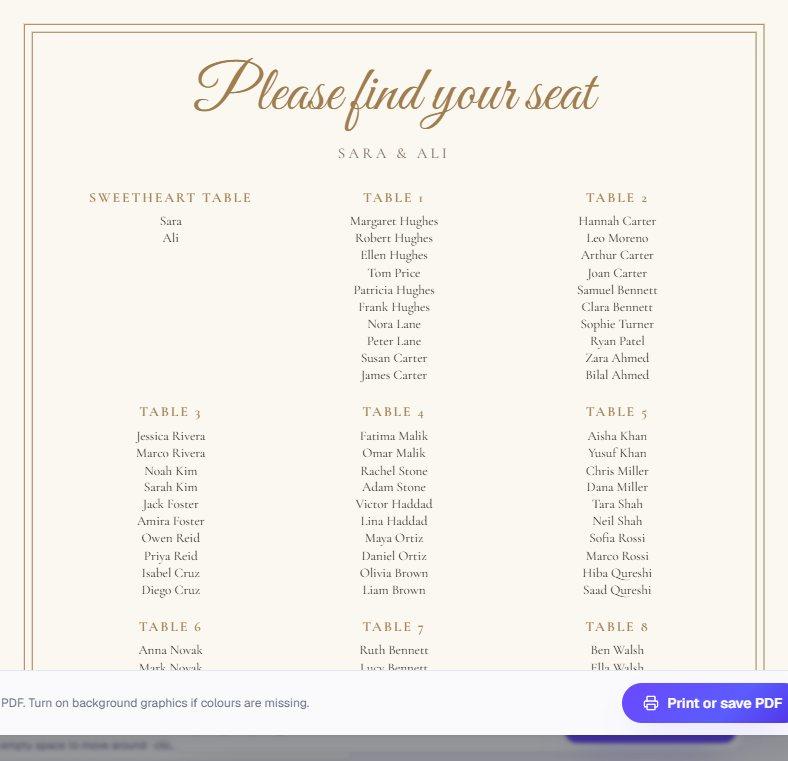
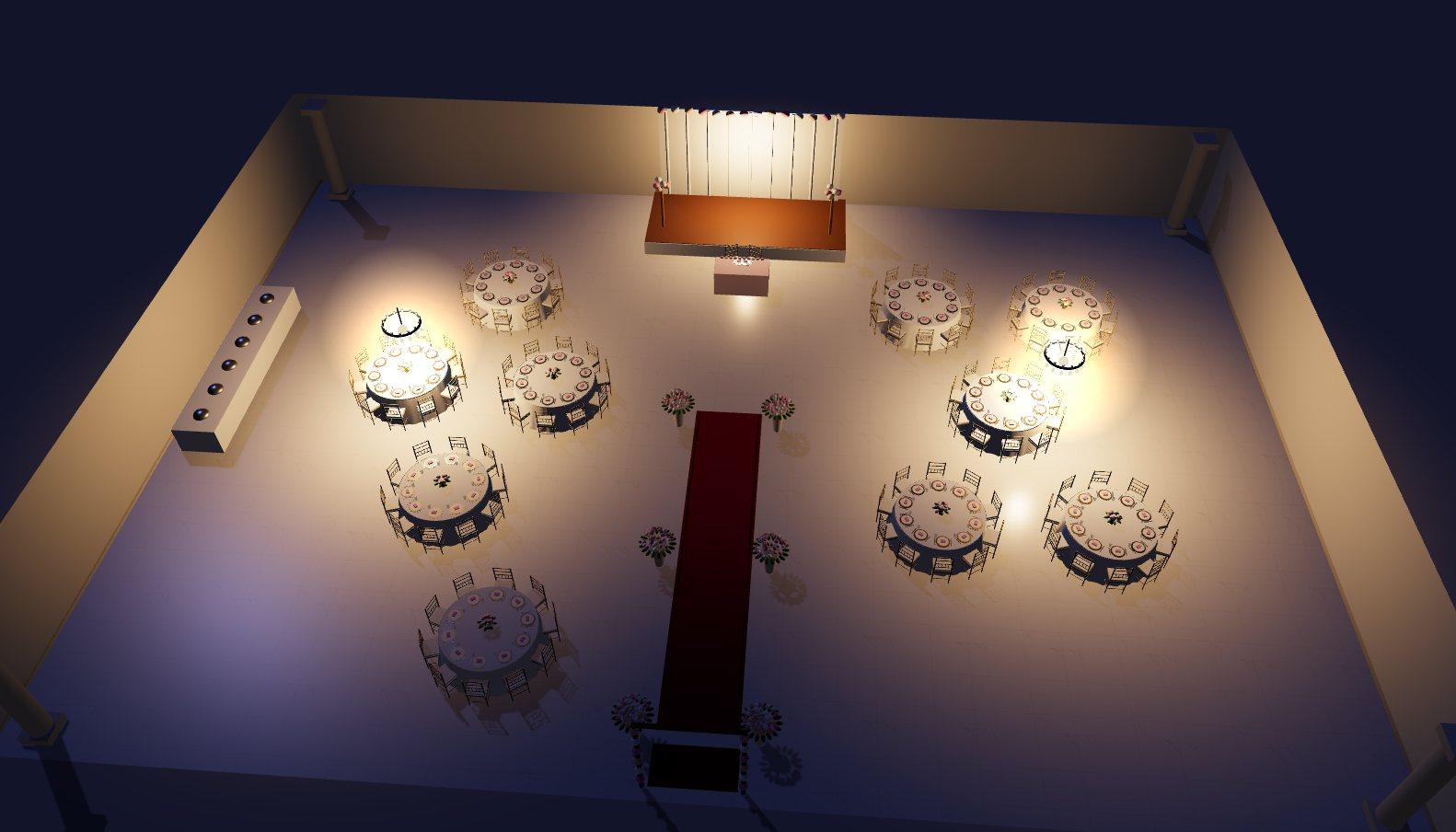
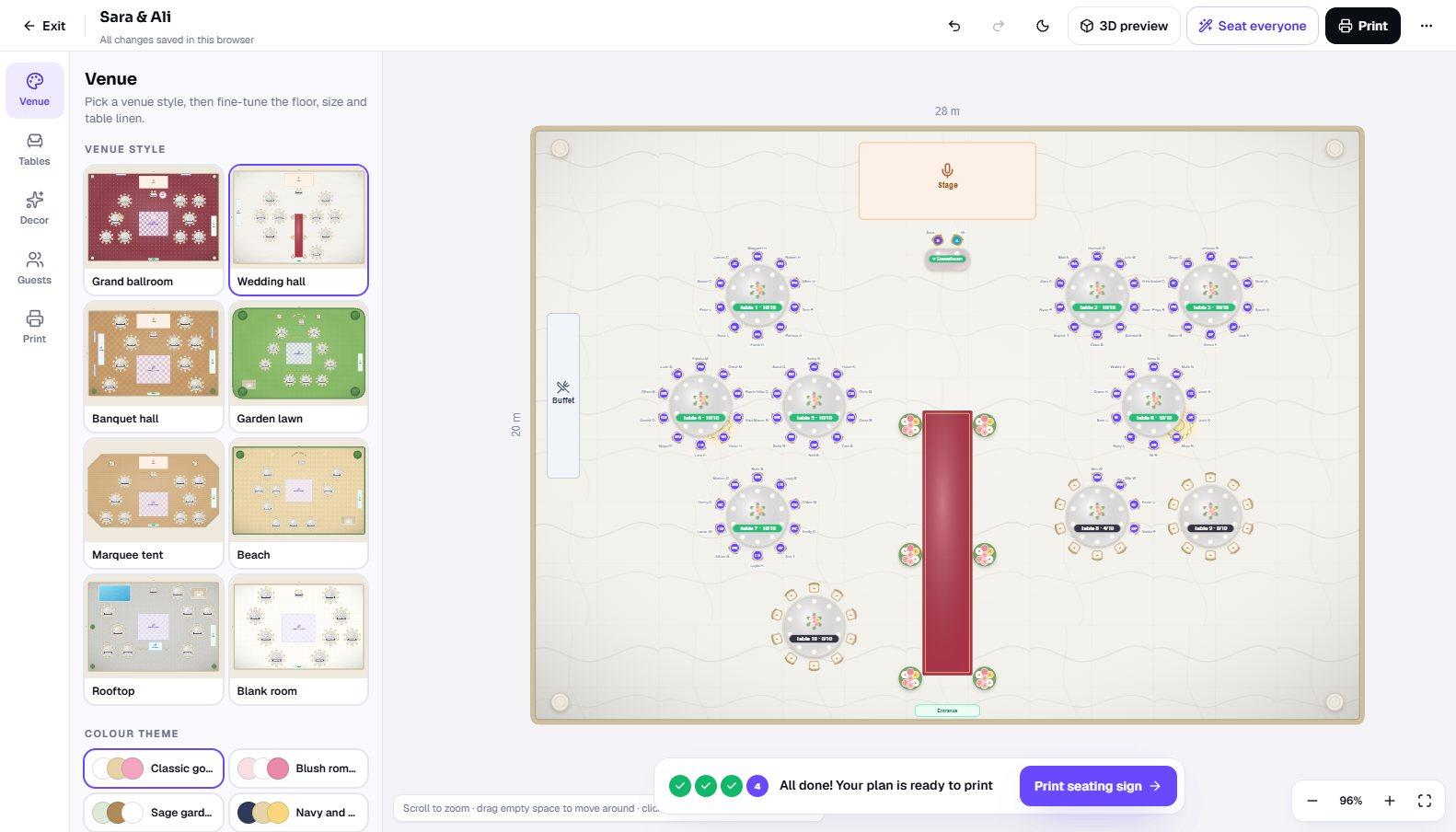
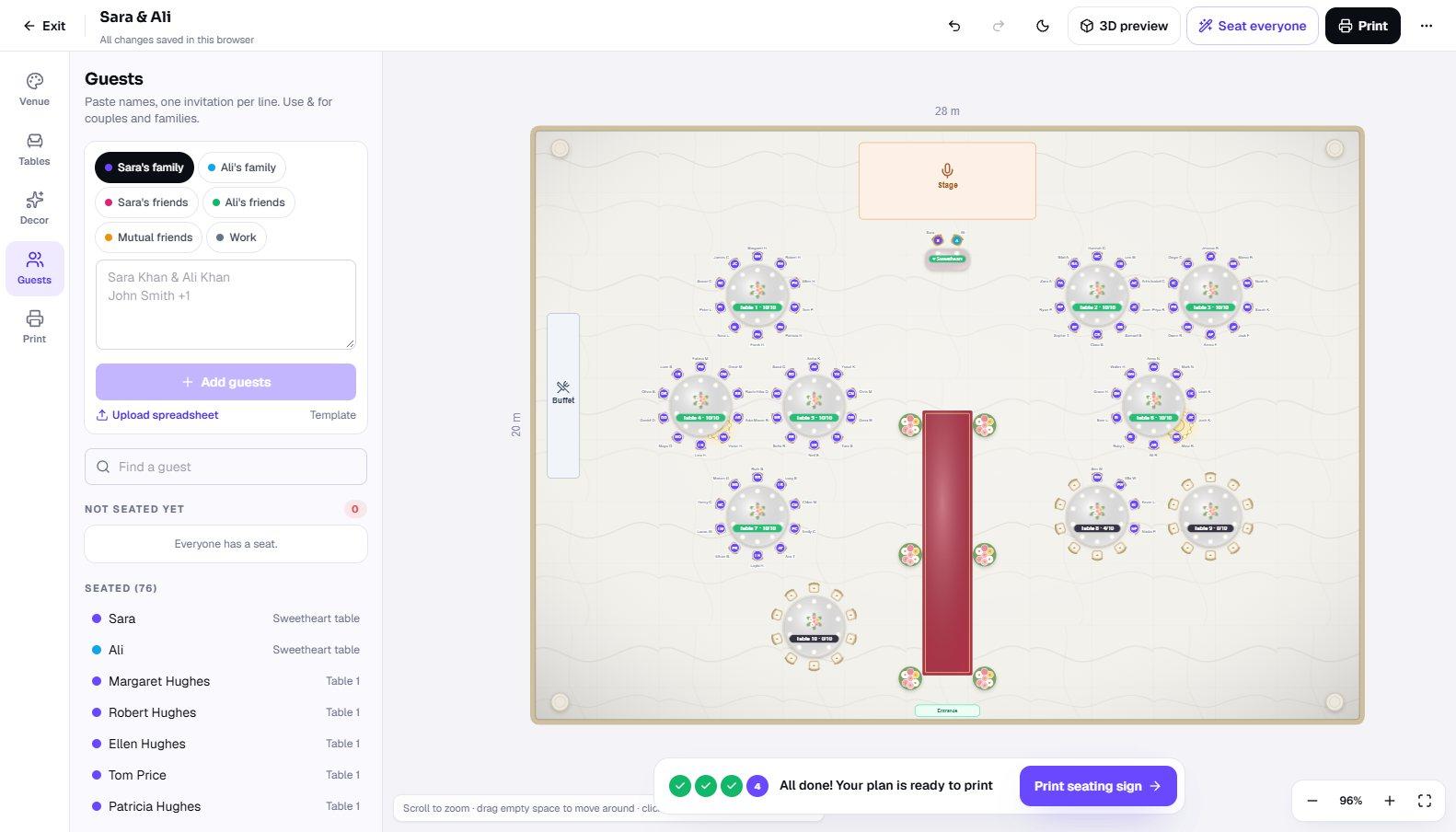
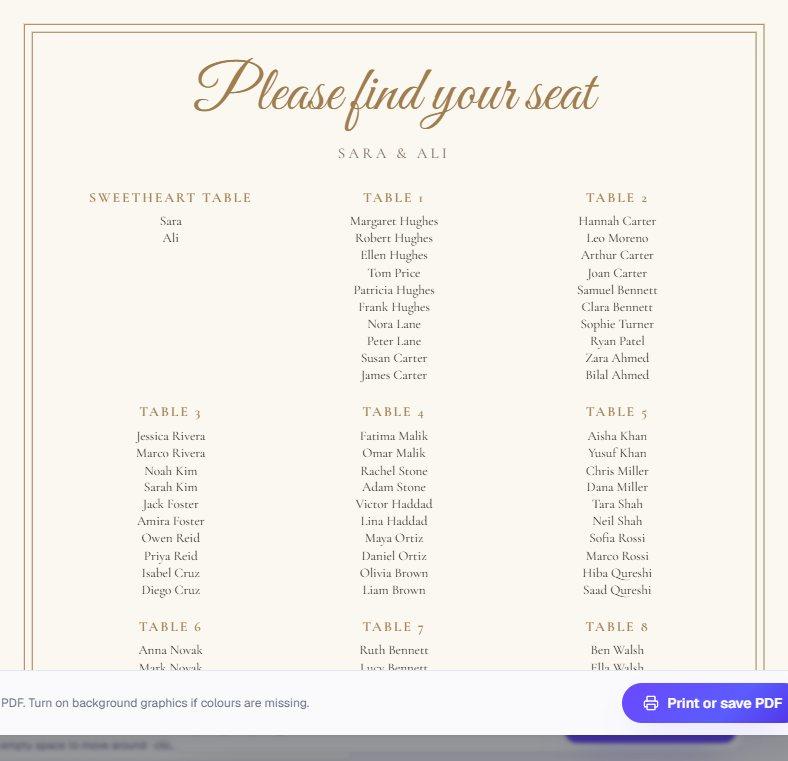
A wedding seating chart is a plan of where every guest sits at your reception. It shows each table, who sits at it and, for formal dinners, which chair each guest takes. On the day it usually becomes a large sign at the entrance that lists guests alphabetically or by table, so people find their seat in seconds. In the UK and Australia it is often called a wedding seating plan or table plan.
A good chart does more than avoid awkward moments. It tells your caterer how many of each meal go to each table, helps your venue set the room, and makes sure older relatives are close to the action but away from the speakers.
When should you make your wedding seating chart?
Start four to six weeks before the wedding, once your RSVP deadline has passed and most replies are in. Finalise it one to two weeks before, when your caterer needs final numbers and meal choices. Print the seating sign and cards last, because late changes always happen.
6 weeks before
RSVP deadline, start the plan
2 weeks before
Final numbers to the caterer
1 week before
Print the sign and cards
How many guests can sit at each table?
Most wedding tables are rounds for 8 or 10 guests. Allow about 60 cm (24 inches) of table edge per guest so everyone has room to eat. These are common sizes from rental companies; always check what your venue actually has.
| Table | Seats comfortably | Maximum |
|---|---|---|
| Round, 48 in (122 cm) | 6 | 8 |
| Round, 60 in (152 cm) | 8 | 10 |
| Round, 66 in (168 cm) | 9 | 10 |
| Round, 72 in (183 cm) | 10 | 12 |
| Rectangle, 6 ft (183 cm) | 6 | 8 with ends |
| Rectangle, 8 ft (244 cm) | 8 | 10 with ends |
| Square, 60 in (152 cm) | 8 | 8 |
| Sweetheart table | 2 | 2 |
How many tables do you need?
Divide your number of guests by the seats per table and round up. Then add one spare table if your room allows, for late RSVPs and vendors. The sweetheart or head table is extra.
| Guests | Tables of 8 | Tables of 10 |
|---|---|---|
| 50 guests | 7 | 5 |
| 75 guests | 10 | 8 |
| 100 guests | 13 | 10 |
| 150 guests | 19 | 15 |
| 200 guests | 25 | 20 |
| 250 guests | 32 | 25 |
| 300 guests | 38 | 30 |
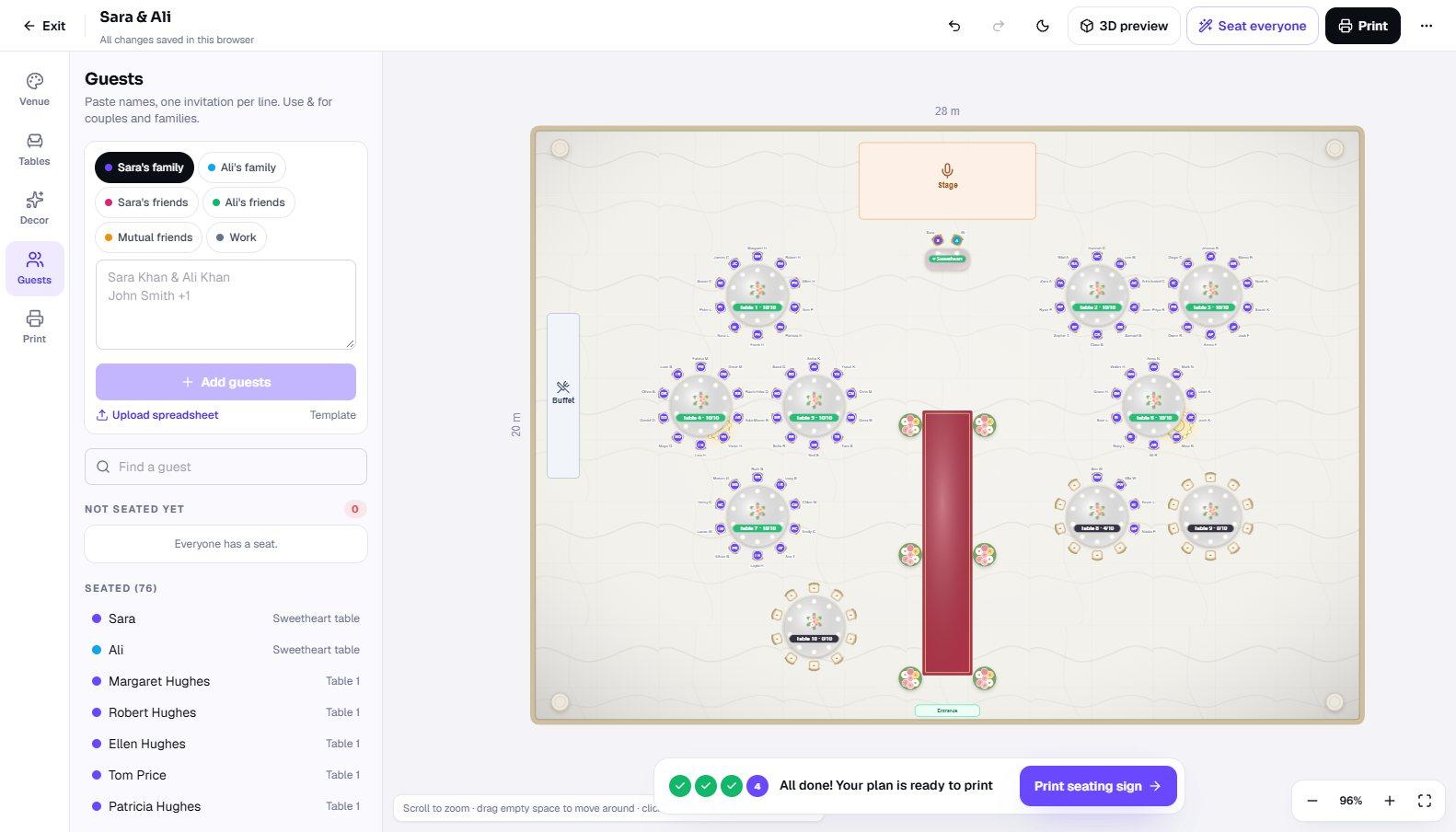
The planner does this sum for you: tell it your guest count and table size, and it builds and places the tables. For every table size, see our full wedding table size chart.
How big does the reception room need to be?
For a seated dinner with a dance floor, bar and buffet, plan roughly 2.3 to 2.8 m² (25 to 30 sq ft) per guest. That means about 230 to 280 m² (2,500 to 3,000 sq ft) for 100 guests. Keep at least 1.5 m (5 ft) between the backs of chairs at neighbouring tables so servers and guests can pass.
For the dance floor, allow about 0.4 m² (4 to 5 sq ft) for each person dancing, and expect a third to a half of your guests on the floor at the busiest moment.
Who sits where? Wedding seating etiquette
There are no strict rules, only kindness and good sense. These guidelines work for most weddings. Our wedding seating etiquette guide covers the tricky cases, like divorced parents and single friends.
- The couple
- At a sweetheart table or a head table facing the room, close to the dance floor so everyone can see you.
- Parents and grandparents
- At the tables nearest the couple. Keep grandparents away from the speakers and close to an exit and restrooms.
- Divorced or separated parents
- At separate tables, each with their own family, and equally close to the couple so neither feels pushed back.
- The wedding party
- At the head table, or with their partners at the tables nearest yours if you choose a sweetheart table.
- Plus-ones and couples
- Always at the same table as the guest who brought them, ideally side by side.
- Friends
- Grouped by how they know you, such as school, university or work, so everyone knows at least one person at the table.
- Children
- With their parents if they are young. Older children often love a kids' table near their parents, with a few activities on it.
- Guests who don't get along
- At different tables, not facing each other. Add a keep-apart rule and the planner will never seat them together.
- Vendors
- Your photographer, videographer and DJ at a small table near the service doors, so they can eat between moments.
Head table or sweetheart table?
Sweetheart table
A small table for just the two of you, facing your guests. It gives you a quiet moment together, and lets the wedding party sit with their own partners.
Head table
One long table with the couple in the middle and the wedding party on both sides, all facing the room. Traditional, great for photos, but partners of the wedding party sit elsewhere.
In both cases everyone at the top table sits on one side so they face the room. The planner places those chairs behind the table automatically. Compare both in our head table vs sweetheart table guide.
Seating chart, escort cards or place cards?
- Seating chart: one large sign listing every guest and their table. Best for 80 or more guests.
- Escort cards: a small card for each guest showing their table, usually on a table or wall near the entrance.
- Place cards: a card on the table itself that marks each guest's exact chair. Use them with either of the above when you assign chairs, not just tables.
The planner prints all three from the same plan: a seating sign, name cards and table numbers. More in escort cards vs place cards.
How to display your seating chart
List guests alphabetically for 100 or more guests, because it is the fastest way to find a name. List them by table for smaller weddings, where it feels more personal. An 18 x 24 inch sign suits up to about 100 guests; go to 24 x 36 inches for larger lists. Place it near the entrance with space for a small queue, on an easel or mirror, and light it if the room will be dark. If you would rather letter it yourself, start from one of our free printable seating chart templates.
Seating chart mistakes to avoid
- Printing too early, before late RSVPs and swaps are settled.
- Forgetting children, plus-ones and vendors in the count.
- Packing tables so tightly that servers cannot reach guests.
- Seating older guests next to the speakers or far from the restrooms.
- Splitting couples or families across tables.
- Not keeping a backup file of your plan.